



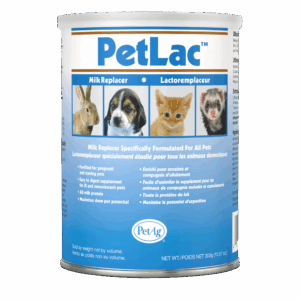

Is It Time to Wean Your Puppy or Kitten?
Wondering if it’s time to start weaning your puppy or kitten? Unsure if they’re ready or how the process works? It’s completely normal to have questions. The PetAg team is here to help!
Puppies and kittens typically begin weaning around 4 weeks of age—or 5 weeks if they are bottle-fed. This is when the mother naturally starts discouraging nursing. If you’re unsure of their age, look for developmental signs such as walking steadily, showing interest in their mother’s food, chewing or mouthing objects, and the eruption of their first premolar (large tooth behind the canine). All puppies and kittens should be fully weaned by 7–8 weeks of age, however, individual development may vary and a veterinarian should be consulted with any medical case.
How to Start the Weaning Process
Separate the litter from their mother during feeding times, which usually occur 3–4 times per day. A shallow bowl or plate makes the transition to solid food easiest. Begin with soft food before moving to dry food.
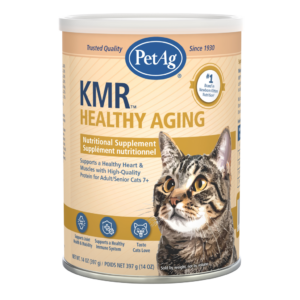
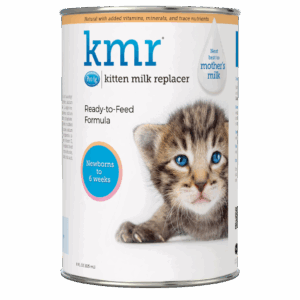
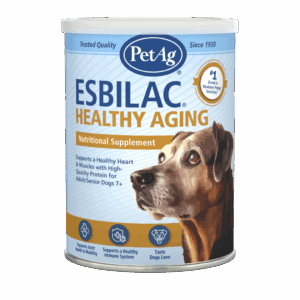
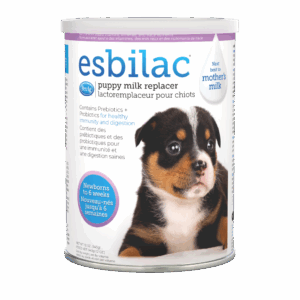
PetAg’s KMR™ Healthy Development (for kittens) and Esbilac® Healthy Development (for puppies) are specially formulated to support this critical transition with next-generation nutrition.
Transition Products
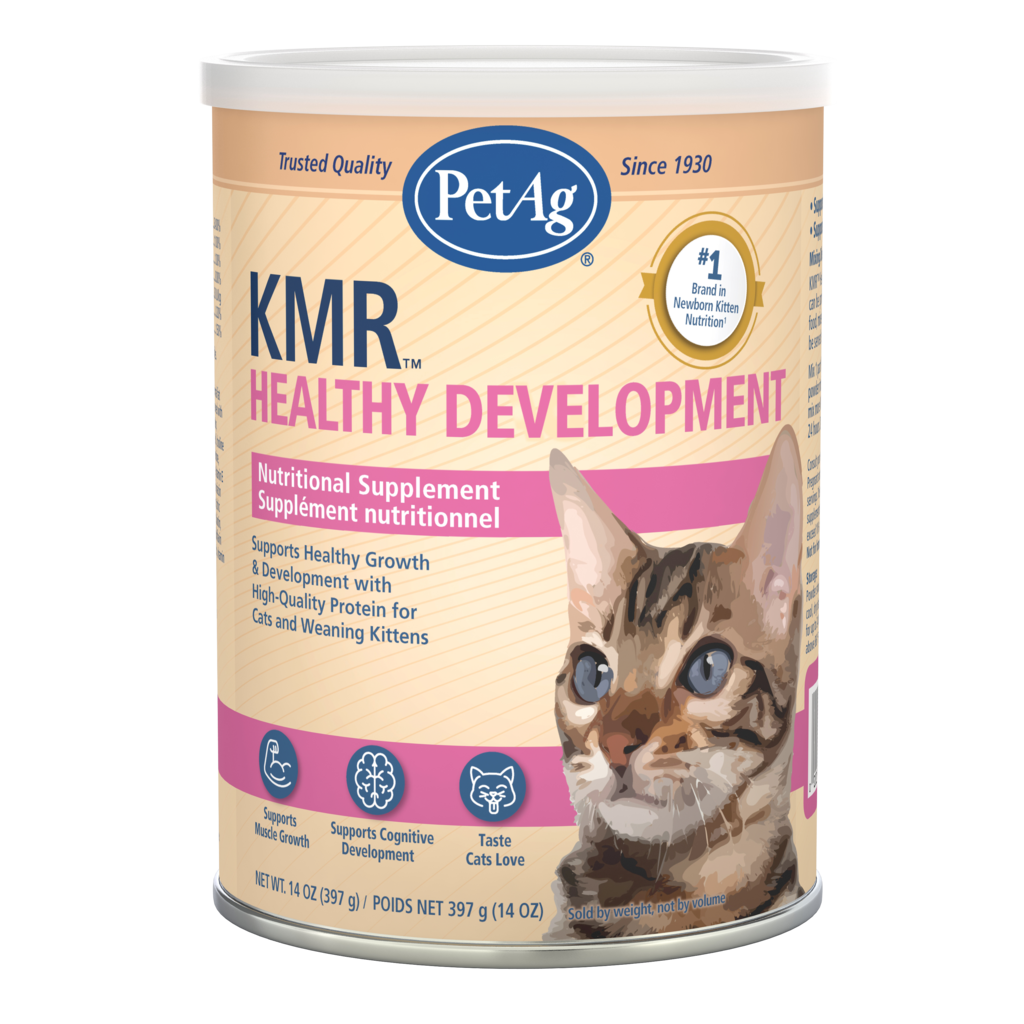
KMR™ Healthy Development Kitten Weaning Food
A creamy, highly digestible supplement that helps nursing kittens move to solid food. Once kittens are steady on their feet and lapping KMR from a shallow bowl, introduce KMR Healthy Development.
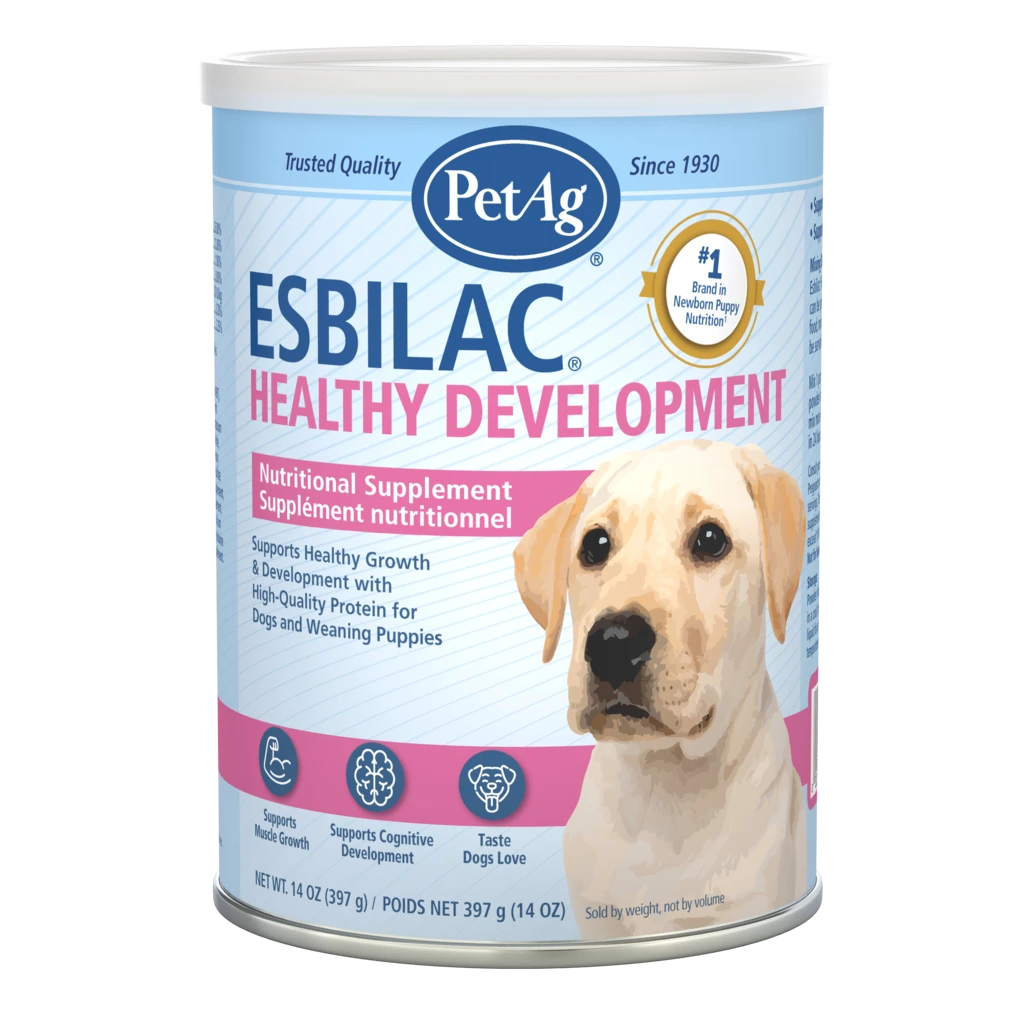
Esbilac® Healthy Development Puppy Weaning Food
A creamy, highly digestible supplement that supports nursing puppies transitioning to solid food. Once puppies are lapping Esbilac from a shallow bowl, introduce Esbilac Healthy Development.
Step-by-Step Guide to Successful Weaning
- Mix reconstituted KMR Healthy Development or Esbilac Healthy Development with canned puppy- or kitten-specific food and place the mixture in a shallow dish. Let them lick it from your finger or place a small amount in their mouth, then gently guide them to the bowl. Handfeeding is perfectly fine if needed.
- If they show little interest, start with only reconstituted KMR Healthy Development or Esbilac Healthy Development in the bowl. These formulas have a thicker consistency that’s ideal for first-time eaters. Once they’re comfortable lapping from the dish, gradually reintroduce the canned-food mixture.
- A puppy or kitten is considered fully weaned when they consistently consume enough solid food to maintain healthy growth without relying on nursing or bottle feeding. Canned food should be offered 3-4 times daily with free access to hard food and water.
Important Safety Tips
- Never force a puppy or kitten’s face into the bowl—this can cause choking or aspiration pneumonia.
- For puppies that will grow into large or giant breeds, control portions carefully to prevent bone or joint problems from overeating. Consult your veterinarian for breed-specific guidance.
- Discard any uneaten reconstituted KMR Healthy Development or Esbilac Healthy Development mixture after 2 hours.
- Always provide fresh water once weaning begins.
- Introduce new foods gradually to minimize digestive upset.
- Feed puppies and kittens separately from adult pets when possible.
- Monitor each individual puppy or kitten to ensure all members of the litter are eating adequately.
- Wash feeding dishes thoroughly after each meal.
- Contact your veterinarian if diarrhea, vomiting, lethargy, refusal to eat, or weight loss occurs.
Monitoring Progress
During weaning, weigh puppies and kittens every 2–3 days whenever possible. Consistent weight gain is one of the best indicators of healthy development.
Hydration Guidance
Fresh, clean water should always be available once the weaning process begins. Puppies and kittens often learn to drink water while learning to eat solid foods.
FAQ: Weaning Puppies and Kittens
When should I start weaning my puppies or kittens?
Puppies and kittens typically start around 4 weeks of age (5 weeks if bottle-fed). Key signs include the mother pushing them away from nursing, walking steadily, showing interest in the mother’s food, chewing or mouthing objects, or the appearance of the first premolar tooth (the large tooth behind the canine).
How do I know they’re fully weaned?
They should be fully weaned by 7–8 weeks of age, however, individual development may vary and a veterinarian should be consulted with any medical case.
What’s the best way to introduce solid food?
Begin gradually with a mixture of reconstituted KMR Healthy Development (kittens) or Esbilac Healthy Development (puppies) and canned puppy- or kitten-specific food in a shallow dish. Let them lick it from your finger first, then guide them to the bowl.
My puppy or kitten isn’t interested in the bowl—what should I do?
Offer only reconstituted KMR Healthy Development or Esbilac Healthy Development first (its thicker texture is easier for beginners). Once they’re comfortable lapping from the dish, gradually add the canned-food mixture. Handfeeding can also help build confidence.
How often should I feed during weaning?
Separate the litter from the mother and offer food 3–4 times per day.
Can I use regular adult pet food during weaning?
No. Always use products formulated specifically for puppies or kittens. Adult food lacks the balanced nutrition they need for rapid growth and development.
How much should I feed my litter?
Follow label guidelines on PetAg products and consult your veterinarian—especially with large-breed puppies, where overeating can lead to bone or joint issues later in life.
Is it normal for weaning to take time or feel slow?
Absolutely. This is their very first experience with solid food, so progress may be gradual. Patience and handfeeding are often needed at the start.
How can I track whether my litter is progressing well?
Weigh them every 2-3 days when possible. Consistent weight gain is the best indicator of healthy development. Reach out to your veterinarian with any questions or concerns.
Puppy & Kitten Weaning: DOs & DON’Ts
Use this quick-reference guide to safely and successfully wean puppies and kittens.
DOs
Provide fresh water and access to dry food
Consult your veterinarian with concerns
DON’Ts
Tip: Always adapt feeding practices and consult your veterinarian when needed.
Veterinarian Disclaimer
This guide is intended for healthy puppies and kittens. Premature, orphaned, underweight, ill, or developmentally delayed animals may require individualized feeding plans. Consult your veterinarian whenever concerns arise.